Friday, December 31, 2010

Signs That A Wart Is Dying

Swiss Watches - History


The history of watches and clocks, ie in the first half of the eighteenth century did not bind to specific companies, because they were engaged in manufacturing individuals known as champions. However, this does not mean that there was no rivalry and competition. On the contrary, every self-respecting big city had to have a high quality clocks. In the care of the quality watches including cities brylowały English, German, and Polish. In Poland, enjoyed great fame Gugenmusowie. It was a family which originated from a number of excellent watchmakers.
currently most popular watches are, of course, Swiss watches . In this country comes from a very large number of reputable companies that deal primarily in the sale of exclusive watches. One of the main reasons which contributed to the fact that it is Swiss watches are high quality was the weather and terrain that is in Switzerland. Whenever winter came, and fell much snow, the village, especially those situated in the valleys, were left almost completely cut off from the world. Then the inhabitants of these villages, with a lot of free time, focus on the many other activities, in order to earn some extra money for more. It should be noted that in the eighteenth century, the inhabitants of Switzerland were not so zamążni as at present, so the more they were determined for this to increase your income. One of the most frequently performed work of cottage industry was the manufacture of components which then produced Swiss watches .
watches to flourish in the mountain country, also contributed to the war and all kinds of persecution in Europe. As a result of which went to Switzerland, a large number of people who were active in pre-production or watch the competition closely related. Poland also has its share of the bloom. Emigrant November Uprising Antonia Patek, concentrated in one place a group of Poles who were involved in watchmaking, and so was one of the leading brands currently producing Swiss watches firm Patek Philippe.
Another reason that contributed to the fact that Swiss watches taken over the world, is the fact that Switzerland is a small State, with a relatively small number of residents. Therefore, in search of outlets many factories producing Swiss watches was directed to neighboring countries.
Swiss watch manufacturer, therefore, learned to cope with any obstacles of fate. They have mastered a very good trading method and during the various crises that could deal with them. An example would be the biggest so far, the crisis which affected companies producing Swiss watches . This crisis was the massive introduction of the world, very cheap and far more functional electronic watches. In the initial period, these companies relied on its reputation. By generating a very high quality, reliable watches practice, these companies received a large number of regular customers, who went on the assumption that the only decent watches, Swiss watches are . There were activities of producers who have tried to reduce production costs and changing its organization, You can now see increased interest in Swiss watches.
The increase in popularity again provides, inter alia, increase in the number of distributors such watches. Swiss watches are sold in more and more emerging online stores, but also in traditional ones. In our country, increase of interest may be linked to, inter alia, with a slight increase in wages, but also with the growing demands of consumers, which is increasingly important to the quality and reliability of the product, not just low price.

by Charles Footer


Thursday, December 30, 2010

New Doctor Welcoming Letter

weather in the mountains - degrees of risk avalanche.


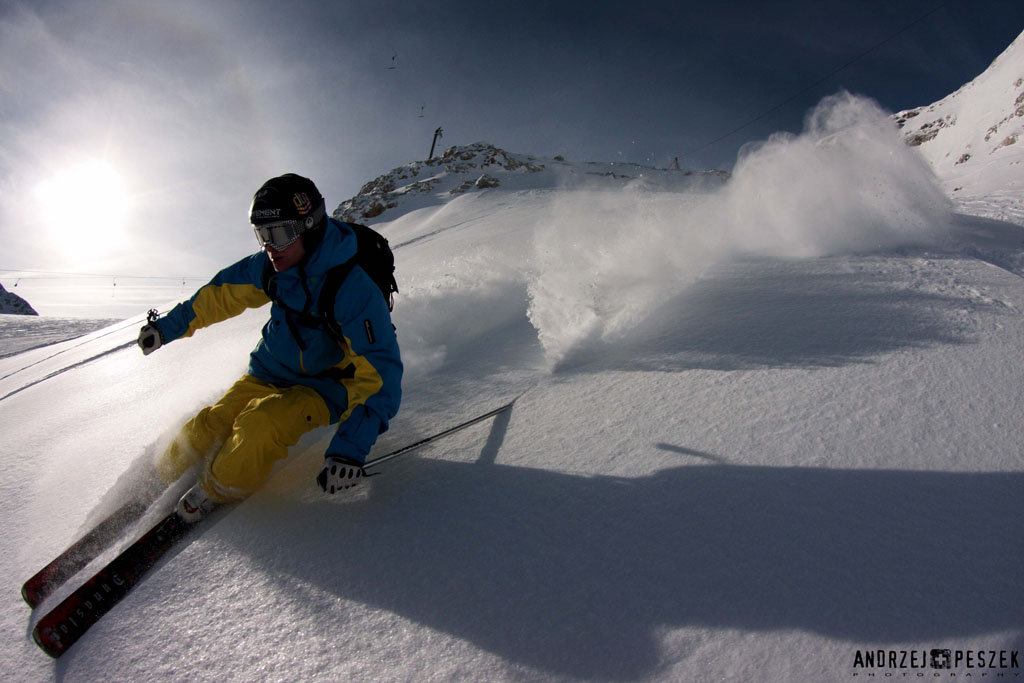
Every year, avalanches in the mountains, collect their toll, although most of these tragedies could be avoided if the victims know what is a yellow-black checkerboard, or at least seemed a aware of how little you might have to trigger disaster. Snowboarders like to ride the more extreme and they should realize how dangerous can sometimes be up when the weather begins to deteriorate.
Everyone knows that the weather in the mountains, sometimes capricious, and should be prepared for the fact that changes are occurring rapidly. Therefore, it is always worth bring extra clothes and something to eat, even a bar of chocolate, in case you surprised us from a sudden change in weather conditions. The most common reason for discontinuation of fun in the snow are the fog and snowfall, but the biggest threat to any holder of the snowboard or skis, are avalanches. Weather in the mountains has its own rules and even if you are near a shelter or a center in which we live, the sun shines, it does not mean that the five miles away can not go crazy snowstorm. Therefore, you should always check the site the degree of avalanche danger, and if you see a yellow and black checkered, to preserve the greatest caution.

Before moving on the road is good to see what is forecasted weather in the mountains in an area in which we intend to ride. Even if the forecast is the beautiful sunshine and a light frost, and so better be careful, especially on steep slopes. It is important not only to look around for signs, every self-respecting snowboarder should know by heart levels of avalanche danger and know when it gets dangerous and should refrain from further riding.

first level of avalanche danger means that snow cover is stable for a long time it was not snowing, and the descent of an avalanche is possible only on very steep slopes at high load. In other words, if the weather is nice in the mountains, you can ride.

second stage is a moderate risk, occurring after rainfall of up to 20 cm of fresh snow. Avalanche may come down to steep slopes where it is on them, too many skiers and special care should be taken on the leeward slopes and passes.

third step means that the weather in the mountains is not on the skiers and tourists. Snowfall ranges from 20 to 40 cm, the cover is poorly bound, and an ordinary jump snowboarders can cause the descent of an avalanche. On the route should extend only people experienced, and even they must avoid certain places, such as the leeward slopes.

In the fourth avalanche hazard may go spontaneously. Announces It is when there is a drop from 40 to 70 cm of fresh snow and the cover is poorly bound. In this case allowed to move only after the safe route and stay on the ground should be kept to a minimum.

fifth step of avalanche danger means that avalanches occur spontaneously, fresh snow precipitation ranges from 70 to 100 cm and the spaces of all exits mountains. In other words, snowboards remain in covers and their owners are waiting until the weather improves in the mountains so that the alarm has been canceled.

details of the forecast in the mountains can be found at http://www.prosnow.pl .
Bartosz Chmielewski

Bus Tickets Clocktower To Ord

Snowboard - tips for beginners. Types of ski turn


experienced snowboarders Although very familiar with the rules, which allow you to protect yourself from accidents on the slopes, but most beginners suffer various injuries mainly through ignorance or neglect. Therefore, it is worth checking with a few tips that will save us the pain and the doctor.
As for snowboarding, advice can be found in many places, such as online forums or exchange resort, but still, every year on the slopes leave a person totally unprepared for this. Certainly not due to their ill will, but the fact that on some things just do not know. The basic problem is of course the right dress, and guards. Beginners often derive their knowledge of various types of films or the observations of other boarders. Unfortunately, they focus primarily on driving styles and trickach not paying more attention to safety. Quite different case that some of the snowboarders in the name of the principles and for the larger dose of adrenaline, intentionally does not imply protectors. People suffer when experienced more or less painful injury, but beginners can end up with a few months in a cast or permanent disability. Therefore, if we're just beginning the adventure from snowboarding, tips protectors should be taken very seriously. So, before enjoying the slopes, be sure to helmet, pads, knee and elbow and tailbone, decent, wearing gloves and goggles stiffened. If someone has had enough may invest money in the special shorts that further protect the thighs and buttocks, and the so-called. armor that will prevent serious injury of the upper body. The place where you can find such pads used, and therefore cheaper, such as stock market is skiing.

Another thing is adequate natural mortar. As for snowboarding, advice on this issue to get a little harder, because for most people, this thing seems so obvious that you just forget about it at the "awareness" for a newcomer. For a good few weeks before the season it is good to to improve our condition, and above all "a stretch." This will allow us not only to enjoy more fun in the snow, but it can also protect us from many injuries. It is a practice "dry" falling forwards and backwards and form a habit of attraction of the head to the chest when falling back and relying on the forearms, hands, and not during the fall forward (a very common error, resulting in numerous injuries to the wrists .) If any of our friends grow snowboard, tips on how to safely fall surely receive from him. And while we're practicing, it is also mastered the ability to get up after falling from a seat on the legs. Contrary to what some believe, this is not so easy, and the ability to quickly raise up after the fall it is important to include for safety reasons. It is difficult to count on the fact that everyone on the slopes will be able to miss us. Although when it comes to snowboarding - advice on this matter just get it and on the slopes, but on the occasion kąśliwych expect a few comments and smileys. Especially if a long while we were rolling in the snow when you try to return to an upright position.
Bartosz Chmielewski
More tips for novice snowboarders can be found at http://www.prosnow.pl .

How To Find Wild Honey Bee Tree


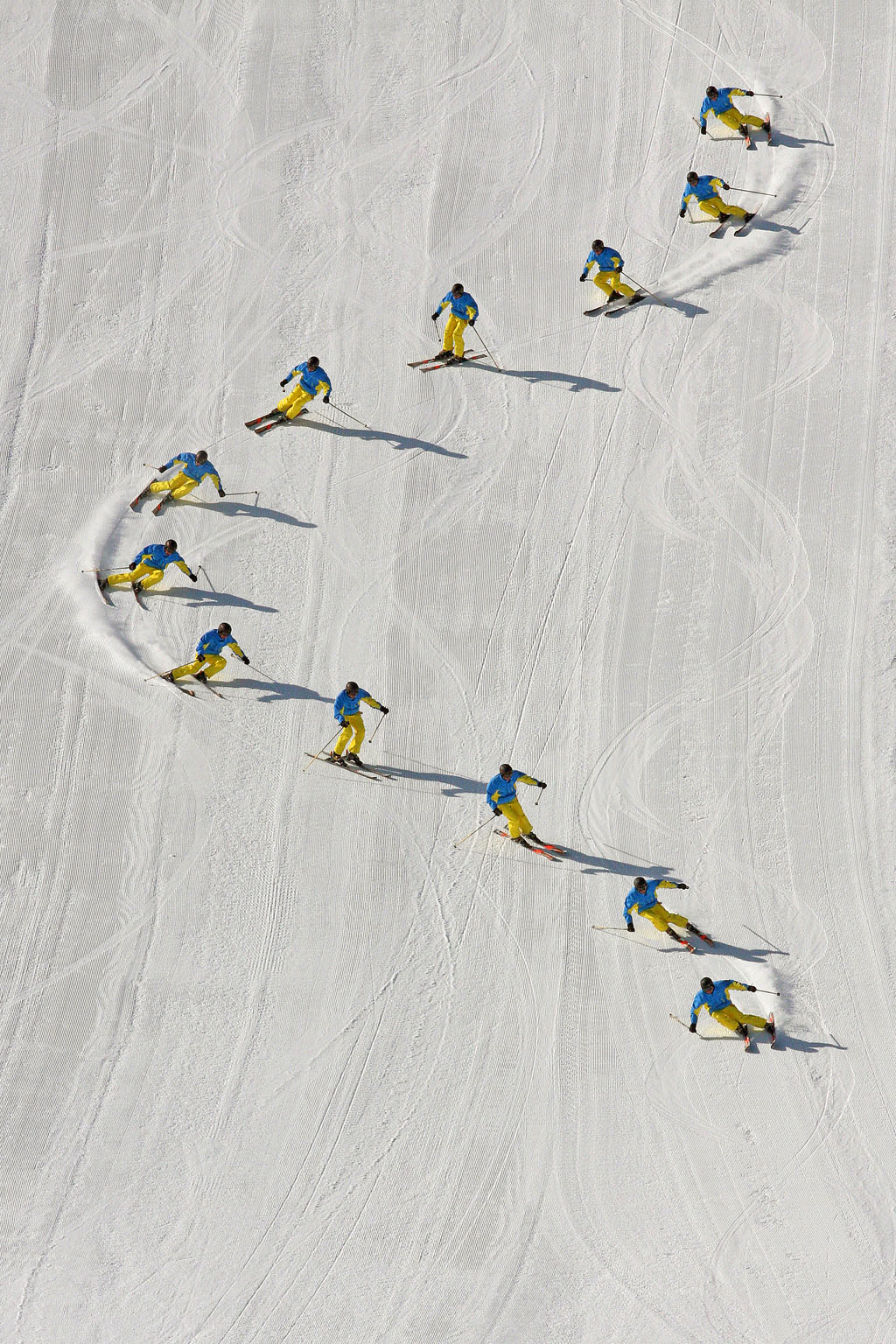
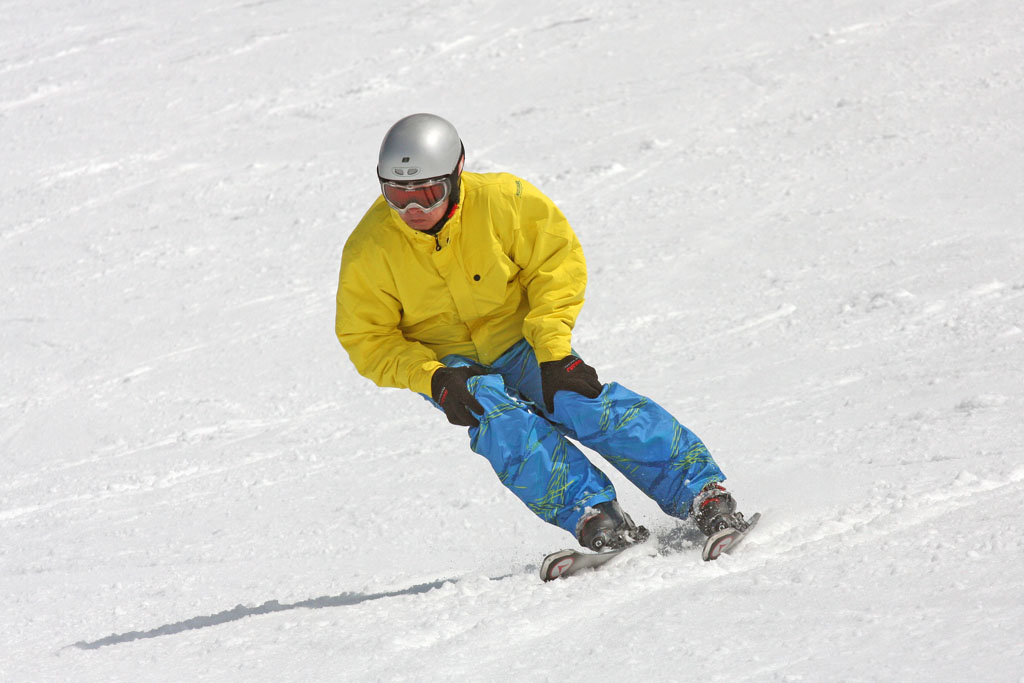
Consider what types of turns are made on the slopes, but they differ and what elements are common to all ski turns.
Turn long:
On the one hand, we have known. turn karwingowy that is, a wide turn out on skis, set at the edges, according to their geometry. Ski the same kind of go, cutting the arc resulting from their Sidecut and natural turn radius.
This means that, for example skiing slalom with a radius R = 12m will be cut on the slope of these curves, and if each time the phase transition between the twists will occur after completion of the turn that is exactly at the time of driving across a slope, then we moved path down the slope with a width of 24 meters. This is a theoretical situation, and in fact never occurs on the slopes - started skiing at the edges by additional bending "strengthen" turning radius and the phase transition usually occurs at the time which is still going down the slope. So our track driving is significantly narrower than the theoretical 24 meters. Indicate that the turn is carried out only at the edges of skis, is cut, clean trail left by the skis on the snow.

twist is called the twist of a long, awkward to avoid using the term "twist karwingowy. Every turn out on skiing is done taliowanych in whole or in part at the edges of skis and in this sense is "karwingowy. The word "karwing" comes from the English "carve" or "carve, cut," and if you look at the trace of any of our turn we'll see it's always more or less distinct, shorter or longer grooves on our skis, which is obvious proof that something is there, "cut out ".
In a twist of a long ski ride alone, we have a do not disturb them. Work your body is limited to maintaining an adequate, fairly static posture and active movements are small, upper half of the body, arms and poles are virtually motionless.
So what we focus in this twist, and what is crucial in all the curves, it is enabled to maintain balance and proper movement of the weight (center of gravity of the body). Practically, during the entire turn keep all or almost all the weight on one leg - the leg outside.
The front-rear axle maintain a balanced position with a slight downforce Ski fronts, especially in the initial phase of the turn.
During the transition between the twists smoothly shifting the weight of the outer ski skis inside, which becomes the outer ski the next turn.
Smooth made a long curl is a great feeling for skiers and pleasure for the eyes of observers. Turn
short:
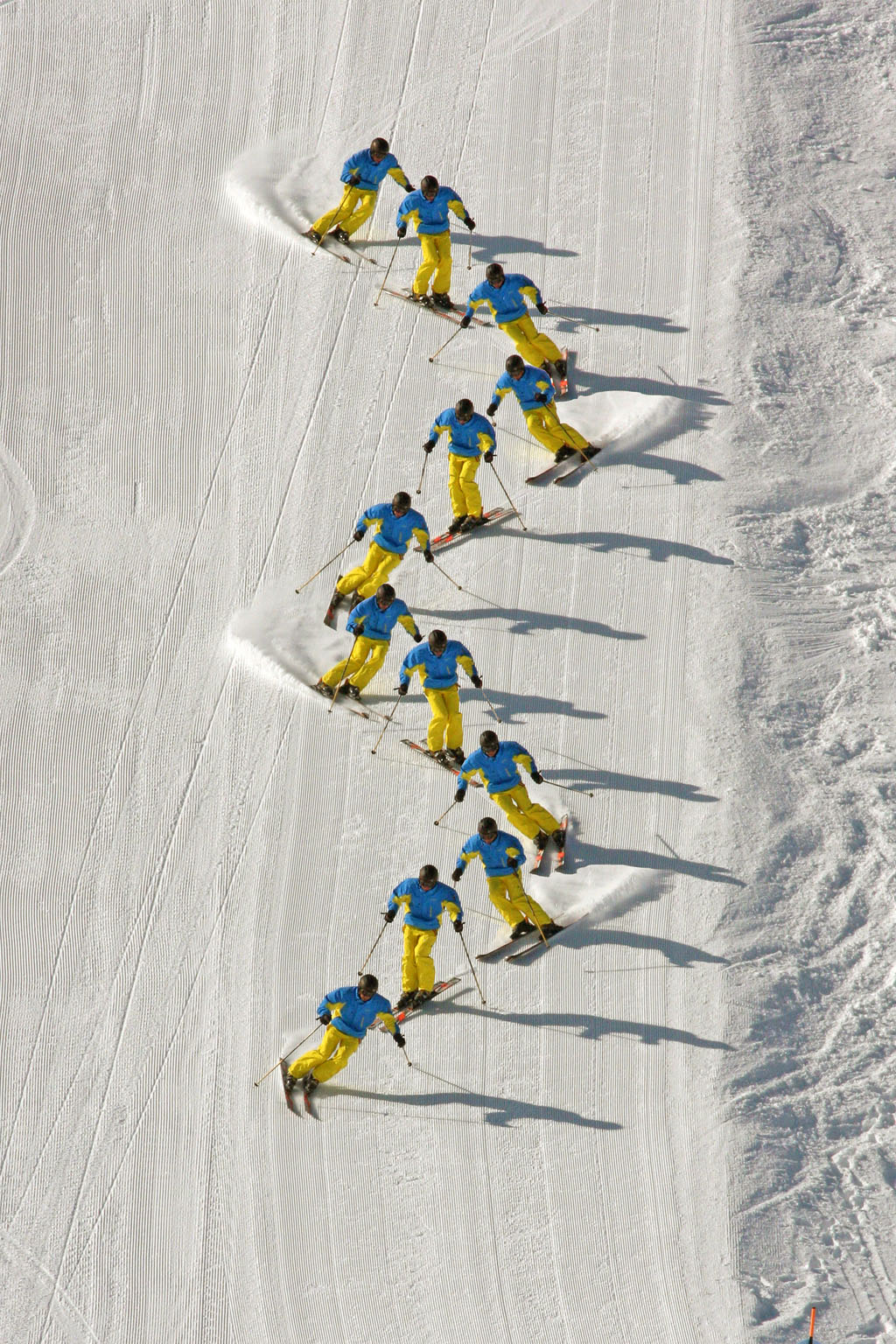
At the other end of the spectrum turns skiing is a short turn. Skiing in a substantial part of the turn going at the edges, and bent up zakrawędziowane but because of the conditions on the slope (a narrow, steep, crowded slope) we perform a tighter turn than the this follows from the geometry of the ski and this is therefore an element of a twist slide skis.
Our movements are much more active, the upper half of the body clearly involved in the execution of the turn, at least the poles pound the beat turns in extreme cases become the axis around which we turn.
balance and weight transfer are similar to the twist of a long, so that the movement of our bodies are faster and more pronounced. Also, a narrow twist is a great sensation for both aesthetic skier and observer.
course between these extreme types of steering the ski, there is a wide range of intermediate types.
Peszek Agnieszka

The Meaning Of White Discharge?

How to choose the appropriate length of skis?


How dobraż appropriate length skis? It is a perennial problem every skier, or how to choose the length of the skis. There are many rules for selection of the length of skis.
ski length selection rules are changing with the change of skiing technique - the appearance of skis carving skis resulted in reducing the length of the ride.
There are many "rules" appropriate length of skis, usually very rough, but sometimes useful.
-expert skiers the skies reaching their forehead, nose and reaching Intermediate Beginner beard. The shorter skis, the easier it is for them squirm at the same time are less stable at higher speeds and on hard slopes. Longer skis are more difficult to twist but more stable in harsh environments.
Referring to an increase in the length of skis skier makes sense, assuming a typical body build. Skiers very thin or, conversely, a massive body build should probably choose the length of skis depending on body weight. Suitable conversion is as follows:
Weight (kg): from ; the length of the ski (in cm)
50                    56                    145
                                   57                    62                    150
                                   63                    67                    155
                                   68                    74                    160
                                   75                    81                    165
                                   82 and more 170

Choosing appropriate for us to ski on the one hand seemingly complicated process, with a wealth of other opportunities that offer us the shops and ski equipment rentals, winter, gives confidence that in the end we find the perfect pair. This is just a matter of time ... and money.
Peszek Agnieszka

Ewf Song On Everybody Hates Chris Episode

errors, old habits - how you train them?


karwingowej Driving technique is a natural technique for skiing. However, even in the natural model, some of the movements and positions are not entirely consistent with our intuition.


karwingowej Driving technique is a natural technique for skiing. We are skiing in a natural, comfortable position, directed his body in the direction in which we go and we do not do unnatural, unnecessary movements. Simply put: put on the edges of skis are going by themselves and we lead them, mainly by moving your center of gravity. However, even in this beautiful natural model, certain movements or positions are not entirely consistent with our intuition or acquired reflexes.
Domination skiing outside
One of the basic principles of skiing is determined to charge one leg - the outer leg. This is proved on the basis of the laws of physics that the application of all or nearly all of our weight to the outer edge of the ski makes a deeper pocket the skis into the snow and skiing better than keeping your weight distribution on the edges of both skis outside and inside. This is particularly important on steep slopes and hard wherever you ski a perfect grip us to control the ride and protect yourself against a violent ześliźnięciem skiing and as a result often fall.
So we always use the principle of "domination of the outer ski" in the strict and harsh conditions are easier (a gentle slope, soft snow), as a more loose.
Horse on one leg is a bit contrary to our natural impulse prop up our bodies as widely as possible, the impulse that tells us the equal use of both legs. Eradicate this reflex is not difficult but requires some conscious effort. The easiest way to reach practicing an exaggerated version of the "domination of the external legs" or ride on one leg.
For this exercise, the best choice sloped gently and the blue route, avoiding, however, very flat stretches - slow ride on one leg is probably more difficult than driving too fast.
gaining proficiency with the time increasing the steepness of slope, speed and time spent on one leg up to the point where it becomes our new way of driving a knee-jerk. It should be remembered that in normal driving inside leg remains in the snow and full of more or less much a supporting role.
inclination forward
second, not entirely compatible with our instincts, is heading to the ski slope to the front and pushing fronts skis, especially in the initial phase of the turn. This position has significant advantages over intuitive and often observed on the slope of the driving position back so inclined. "Riding on the back." First, we are committed firmly to the front of the ski turn, clearly setting out or even cut out in the snow track, after which then moves the entire ski. Secondly, due to deeper sidecut skis in the front part compared to the rear, using skis fronts are setting tighter arc driving a widening or reducing the pressure on the fronts modify the appropriate turning radius. Another, non-trivial advantage przodach driving is much less risk than a ride on the back "to take the" skis from us forward, resulting in painful bumps and cushioned back of the body.
Pressure fronts, we can practice in many ways.
The first way is to consciously skew our profiles to the front in normal driving, especially at the beginning of the turn. The confirmation of this tilt is a feeling of pressure on the languages \u200b\u200bof shoes and undeniable proof touch the front of the ski and snow in all phases of the turn, you see in photographs or films with our run. If it makes us a particularly difficult (and often make), we can exercise pressure forced front of the skis, riding with hands located on the knees, shins dociskającymi mechanically to the languages \u200b\u200bof our shoes. The next exercise, a possible connection to exercise "calm arms" (as in a moment) is driving from united by horizontal poles that every time you go to the initiation phase of the turn, strongly pushed forward.
Quiet arms
Skiing is a dynamic exercise. Alternate move our center of gravity from one side to the other ski, and each time catching the balance in the extreme lateral deflection is something of a walking a tightrope. I like walking a tightrope, a young acrobat waving his arms quite chaotic, so we execute a lot of arm movements, which are (at least so we think) to help us catch the balance. With time, acrobat, who is adept ski champion and with the development of their skills find that the more efficient movement of hands and arms all the more calmer and easier to maintain fluid balance. Therefore, we should seek from the beginning to calm down our arms and reduce hand movements to a minimum. In an extreme variant of driving broad, gentle twists, our arms remain motionless practical and what is more owing to the collapse of the hips (as in a moment) and so our shoulders and arms are in the second and third phase twist in a position parallel to the ground.
It is ideal to which we strive for. In fact, the slope seen many variants of improper conduct in a twist of shoulders. The most common mistakes, leave your hands back and especially the fall and left hand inside the back (but with excessive rotation of the body down the slope, it is possible that is also a variant on the opposite hand on the back of Staying outside). Moreover, there is a wide range of various "wymachiwań" poles, which we observe on the slopes, some of them seem to be close to the art of fencing.
to unlearn all the options overly active arms, they must be completely calm down, as it were "frozen" in a proper and comfortable position.
This is achieved by driving the poles been handled or united by a horizontal or slightly more difficult version kept separately in an upright position but kept the same level.
collapse in the hips last longer
element for which we want to draw attention, and which often causes difficulty for us is the lateral deflection in the figures of our time skiing or collapse in the hips. The natural reaction to the increasing centrifugal force, arising during the rapid-turn is simply the inclination of the body in the direction of center of the turn. So riders are doing or we Tor riding a bike while crossing arcs, so they do speed skaters at the rounded parts of the track.
For skiing, our point of support does not fall exactly in the natural projection of our center of gravity as a bicycle (tires narrow measure) and skating (narrow skate). Skiing the fulcrum is situated more or less on the side, depending on the width of the ski under the thumb, edge of the ski. Therefore, to the maximum weight on the edge, we move our center of gravity even more to the center of the turn, pushing in this direction our hip. At that time, our top half bend a little in the other side and thus get the edge perfectly weighted down while its maximum zakrawędziowanie - punching into the snow. Both results, taken together, give us what we most need in a dynamic twist - the perfect grip of the ski.
Science sagging of the hips is also based primarily on self-aware "wpychaniu" internal hips turn toward the center during normal driving and monitoring progress by analyzing the images or videos from our observations of driving or friends with whom we go.
If due to the habits, body structure or natural limited flexibility in the hips, the movement of the hips push comes to us with great difficulty, we can help them mechanically pushing the outer arm, or doing an exercise known as "krakowiaczkiem.
Peszek Agnieszka