Consider what types of turns are made on the slopes, but they differ and what elements are common to all ski turns.
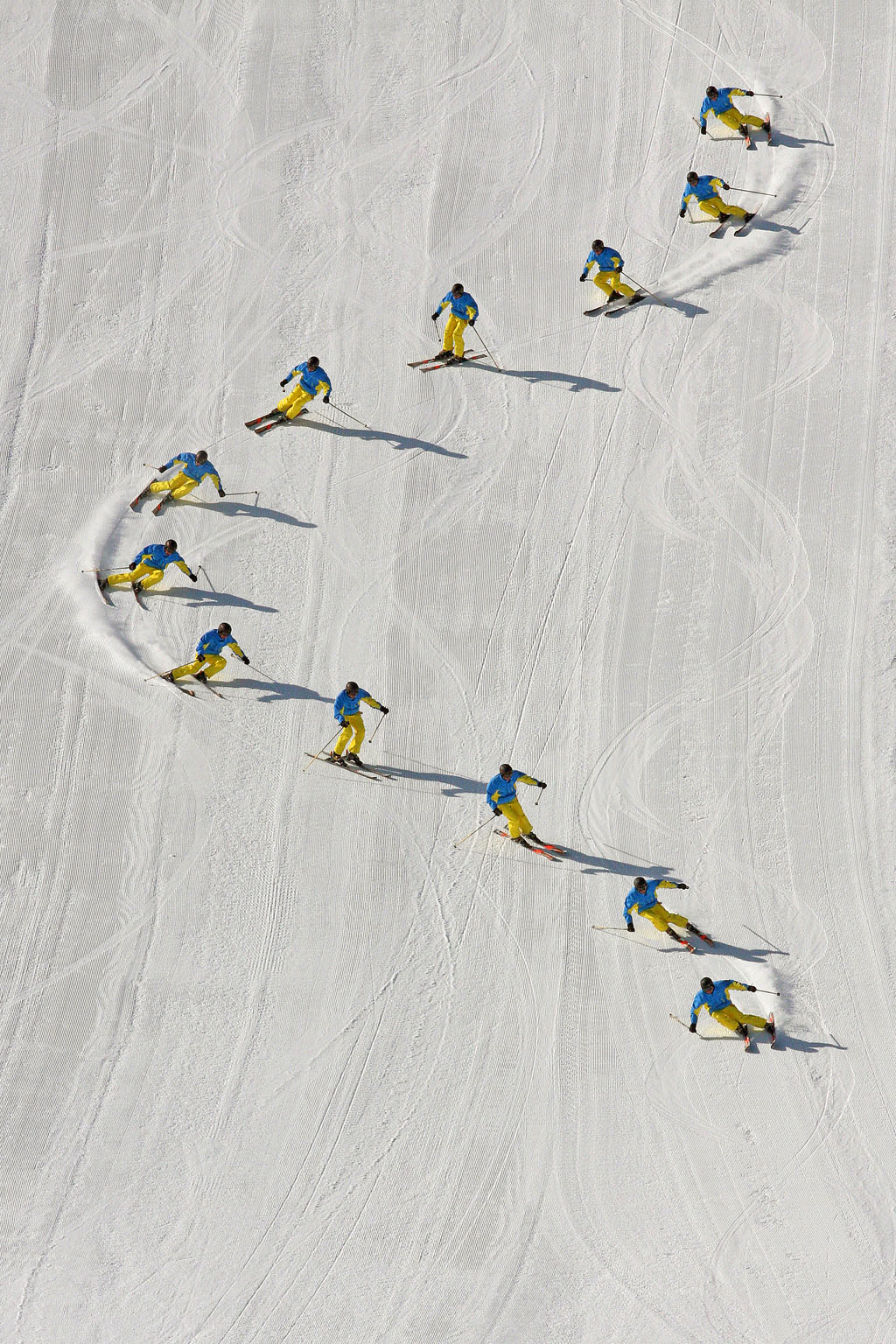
Turn long:
On the one hand, we have known. turn karwingowy that is, a wide turn out on skis, set at the edges, according to their geometry. Ski the same kind of go, cutting the arc resulting from their Sidecut and natural turn radius.
This means that, for example skiing slalom with a radius R = 12m will be cut on the slope of these curves, and if each time the phase transition between the twists will occur after completion of the turn that is exactly at the time of driving across a slope, then we moved path down the slope with a width of 24 meters. This is a theoretical situation, and in fact never occurs on the slopes - started skiing at the edges by additional bending "strengthen" turning radius and the phase transition usually occurs at the time which is still going down the slope. So our track driving is significantly narrower than the theoretical 24 meters. Indicate that the turn is carried out only at the edges of skis, is cut, clean trail left by the skis on the snow.
twist is called the twist of a long, awkward to avoid using the term "twist karwingowy. Every turn out on skiing is done taliowanych in whole or in part at the edges of skis and in this sense is "karwingowy. The word "karwing" comes from the English "carve" or "carve, cut," and if you look at the trace of any of our turn we'll see it's always more or less distinct, shorter or longer grooves on our skis, which is obvious proof that something is there, "cut out ".
In a twist of a long ski ride alone, we have a do not disturb them. Work your body is limited to maintaining an adequate, fairly static posture and active movements are small, upper half of the body, arms and poles are virtually motionless.
So what we focus in this twist, and what is crucial in all the curves, it is enabled to maintain balance and proper movement of the weight (center of gravity of the body). Practically, during the entire turn keep all or almost all the weight on one leg - the leg outside.
The front-rear axle maintain a balanced position with a slight downforce Ski fronts, especially in the initial phase of the turn.
During the transition between the twists smoothly shifting the weight of the outer ski skis inside, which becomes the outer ski the next turn.
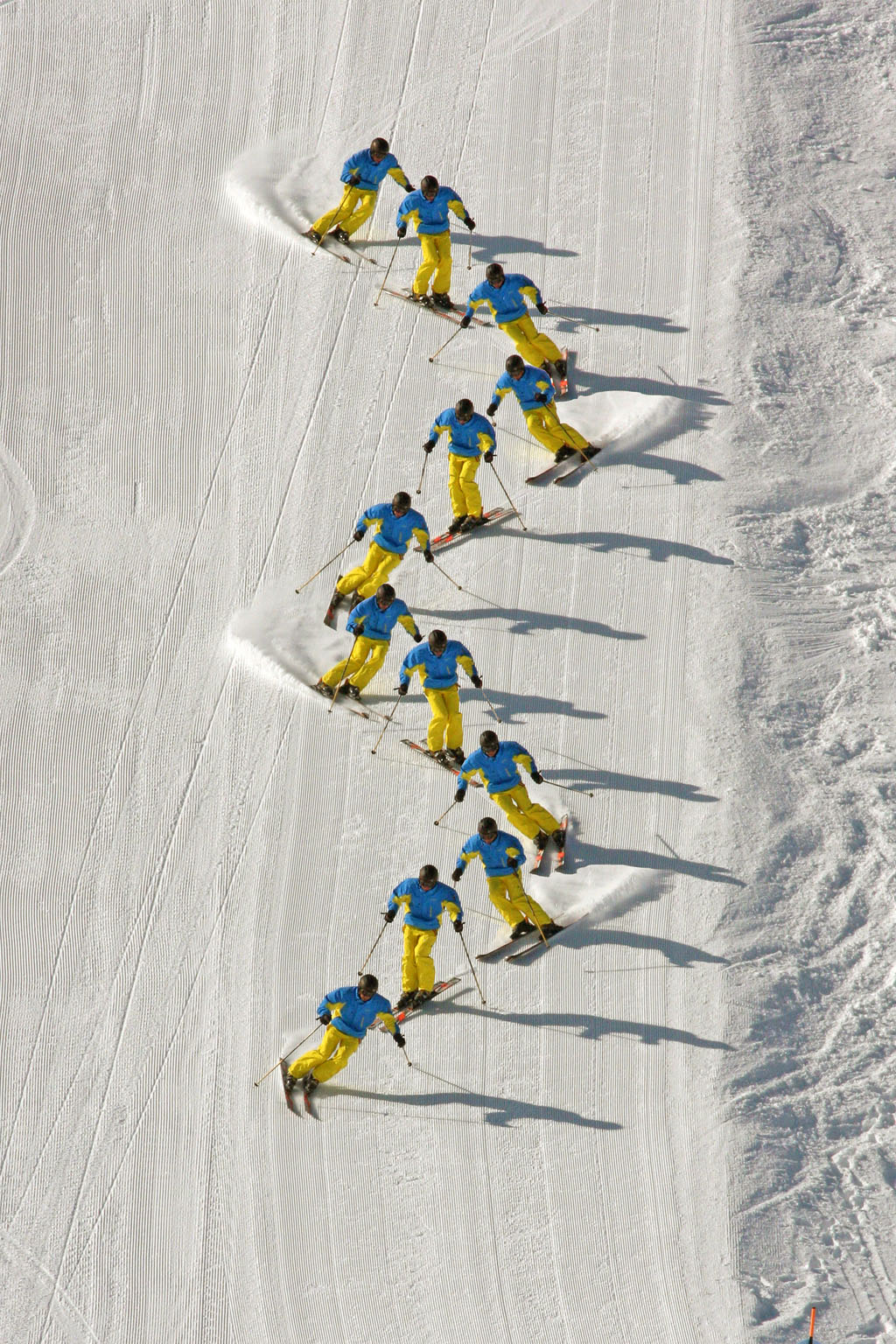
Smooth made a long curl is a great feeling for skiers and pleasure for the eyes of observers. Turn
short:
At the other end of the spectrum turns skiing is a short turn. Skiing in a substantial part of the turn going at the edges, and bent up zakrawędziowane but because of the conditions on the slope (a narrow, steep, crowded slope) we perform a tighter turn than the this follows from the geometry of the ski and this is therefore an element of a twist slide skis.
Our movements are much more active, the upper half of the body clearly involved in the execution of the turn, at least the poles pound the beat turns in extreme cases become the axis around which we turn.
balance and weight transfer are similar to the twist of a long, so that the movement of our bodies are faster and more pronounced. Also, a narrow twist is a great sensation for both aesthetic skier and observer.
course between these extreme types of steering the ski, there is a wide range of intermediate types.
Peszek Agnieszka


0 comments:
Post a Comment